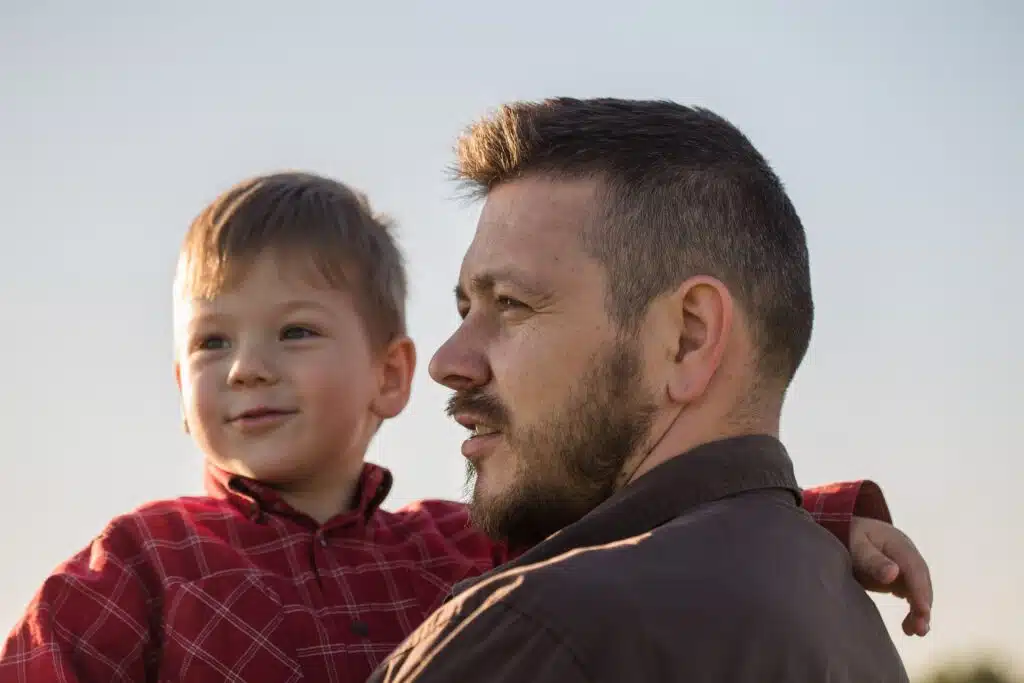
Before treatment, Michael describes life as stressful and exhausting.
As a self-employed tradesman living with chronic back pain, he spent years stuck in a cycle he couldn’t break: working through pain, relying on prescription opioids to keep going, then promising himself he would stop “after this week.”
“I’d try to quit cold turkey,” he says. “You stop on a Thursday, give yourself Friday, Saturday, Sunday, hoping Monday feels better, and it just doesn’t. Then Monday comes, you’ve got work and customers, and you’re right back to making calls, trying to find pills again.”
It wasn’t just physically draining. It was mentally consuming.
Even before painkillers became part of his daily routine, Michael says substance use had been a long-running struggle, something that kept him stuck in an immature “party mindset” well into adulthood. Over time, life stress and difficult circumstances made it easier to fall back into old patterns.
Then he became a father, and his priorities changed.
“My son became my main motivation,” he explains. “Everything I was doing was to be better.” But when life became complicated and painful, he spiraled again until he reached a point where he knew something had to give.
After getting his life back on track, Michael focused on rebuilding, working consistently, staying healthy, and doing everything he could to be present for his child. But once he returned to physically demanding work, his chronic pain flared and opioids quickly became the solution again.
“It started small,” he says. “Percocet, Vicodin, whatever I could find. Then it progressed. And the more I used, the more I pushed my body, and when the pills wore off, it hurt even worse.”
Eventually, he realized he was not dealing with willpower anymore. He was dealing with dependence.
“I tried quitting three or four times,” he says. “No matter how I did it, I got sick. I’d hit day three or day four, and I’d cave because I still had to work. I didn’t have a choice. I couldn’t be sick.”
That is when he started searching for options in his community, something that could help him stabilize without having to step away from his responsibilities.
When Michael found treatment, what stood out most was that help was available immediately.
“I went in, tested positive, and they had a solution right then and there,” he says. “And I was able to go to work.”
Over time, he says the biggest change was not just physical. It was how his life started to function again.
On his best days now, Michael is not chasing pills, panicking about Monday morning, or negotiating with himself. He is building a life that feels steady.
“I’m still functioning,” he says. “I’m running a successful business. And I got full sole legal custody of my son.”
For Michael, that stability is everything.
He is honest that treatment has not been perfect and that the process of tapering and long-term recovery can feel slow. But he is equally clear about one thing. Going back is not an option.
“I was ready,” he says. “If this didn’t work, going back wasn’t even on the table. There are no cravings anymore. No triggers. I’m done with that lifestyle.”
Today, Michael’s story is not about being flawless. It is about being consistent, showing up for his work, his health, and most importantly, his son.
And for anyone still stuck in that rinse-and-repeat cycle, he wants them to know that a different life is possible and getting help can be the first step toward getting yourself back.