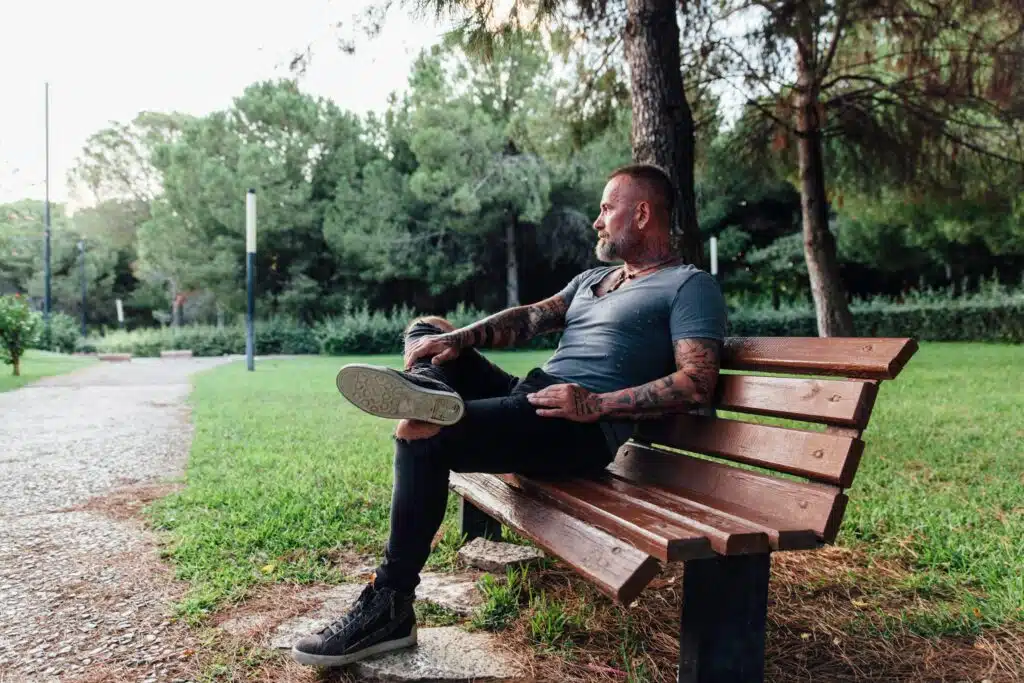
For much of his life, John describes addiction as a cycle he could not escape. There were moments when things felt manageable, followed by long stretches where everything crashed again.
“It was like riding a wave, getting smashed, getting back up, and then getting smashed again. Over and over.”
As his addiction deepened, John became increasingly isolated. Friends he had grown up with drifted away, replaced by people who revolved around drugs rather than genuine connection. Over time, he realized he no longer recognized himself.
“I didn’t like the person I was becoming,” John said. “That was when I knew something had to change.”
John had experienced recovery before. Years earlier, he was able to stop drinking alcohol and build a life where it no longer had a place. But opioids proved to be different. He tried multiple approaches, including detox programs and medications without ongoing support. While some helped temporarily, they did not address what he needed most.
“I didn’t just need medication. I needed counseling. I needed connection.”
Eventually, John found his way to consistent treatment at BAART Programs. This time, his mindset was different. Instead of looking for a quick solution, he committed to showing up and doing the work, even when it was uncomfortable.
Counseling became a key part of his recovery. While counselors have changed over time, John learned that each new relationship allowed him to reflect on his past, share his story, and continue moving forward.
“I’m not starting over,” he explained. “I’m just continuing.”
In 2020, John received a cancer diagnosis that changed everything. Managing his addiction suddenly felt inseparable from managing his health. Staying engaged in treatment gave him the stability he needed to face medical care and focus on survival.
“If I hadn’t taken care of my addiction, I wouldn’t be where I am today with my health.”
John believes recovery gave him clarity, strength, and the ability to slow down. For the first time, he allowed himself to focus on healing—physically, mentally, and spiritually.
Today, John does not describe recovery as a straight line. There are ups and downs, but the difference is knowing how to return to what works.
“I call it staying on the train,” he said. “You might get off sometimes, but you get back on.”
Part of staying on track means helping others when he can. John has become someone people turn to for support, whether that means sharing his experience or simply being present.
“Showing up is most of the work. If you can do that, the rest can follow.”
For John, recovery is not about erasing the past. It is about accepting it, learning from it, and continuing to show up—one day at a time.